
Shalisha Bynoe
Mount Pleasant, S.C. — Retired teacher Heather Coker discusses the history of Boone Hall, the preservation of its slave quarters, and the aftermath of the Antebellum period for freed men and women in Charleston.
Boone Hall Plantation, a fixture in television and film programs like Days of Our Lives, North and South, and documentaries such as Alex Haley’s Queen and The Notebook, effortlessly merges fantasy with the stark truths of its past. Established in 1681 by Elizabeth and Major John Boone, the plantation remained in their family for over a century.
Its legacy is intertwined with the exploitation of enslaved individuals, as cash crops flourished at their expense. Thus, Boone Hall Plantation reflects both agricultural and African American histories.
“So, Boone Hall today is 738 acres, but at its largest was over 4,000 acres,” Coker said. “They grew over 1,000 acres of cotton. They did grow indigo here, which is a big deal for South Carolina. It’s that pretty blue dye in the state flag.”
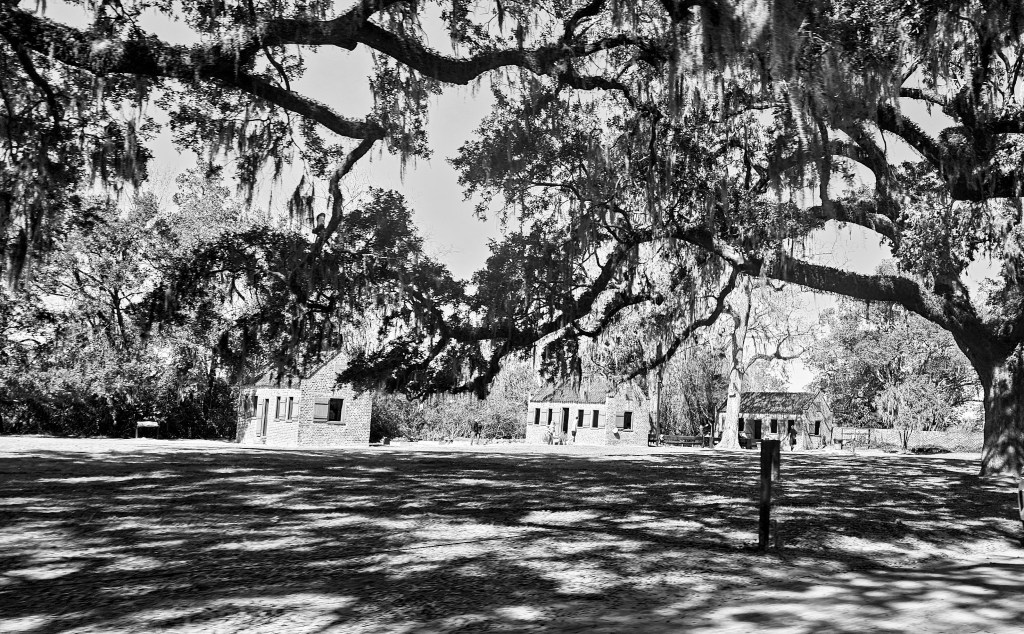
Coker emphasized the importance of discussing slavery at Boone Hall Plantation and shared insights into the slave quarters, constructed between 1790 and 1810. Although over 200 years old and recognized by the National Historical Society in 1918, only nine dwellings were preserved by archaeologists at Boone Hall Plantation.
Coker believed there were originally 20 to 27 cabins.
“I don’t know what happened to them,” Coker said.” But these cabins were built by the hands of the skilled slaves of the islands.”
The cabins at Boone Hall Plantation stood out with their distinctive design featuring English Pantile roofs and construction materials such as mortar, seashells, oyster shells, sand, water, and ash. Weepholes were at the base of the cabins to prevent flooding. Coker notes that each cabin housed up to 15 enslaved individuals.
Despite its purpose, these cabins had distinctive features. “Most slave cabins were not brick,” Coker said. “They were wood. But this was a brickyard plantation at one time and made from cast-off bricks. They’re small pieces that they would not be able to sell. But it (the cabins) are still in perfect condition.”
The cabins at Boone Hall Plantation were larger than traditional wooden cabins. Each cabin came equipped with eight or more windows and a fireplace.
“The location also makes it unique,” Coker said. “Think back to the 1800s. Charleston was one of the wealthiest cities. So, placing your enslaved people in the front of your dwelling shows off your wealth.”
Coker added that skilled blacksmiths, carpenters, bakers, and cooks stayed at the cabin. Considered valuable assets, these men and women lived close to the overseer’s dwellings. The earliest slaves believed to have arrived at the plantation were the indigenous Catawba
Indians.
However, starting from 1711, slave ships began arriving from Africa. Between 1711 and 1808, over 800 slave ships docked at the Port of Charleston, bringing slaves from Central West Africa and Barbados.
Africans were deprived of rights and adequate food. They had to supplement meals with fish and small animals captured in traps. Despite these harsh conditions and ill-treatment, enslaved men
and women continued to carry out their duties on the plantation.
“They worked from sunup to sundown,” Coker said. “I don’t know if you’ve ever visited Charleston during summer, but it’s stinking hot and humid.”
After the Emancipation Proclamation passed in 1865, 300 freedmen and women were on the plantation. Half of those individuals traveled north. However, the other half remained at Boone Hall Plantation.
“What do you think they did while they were here?” Coker asks. “They stayed and did the same thing. So, they still lived in these cabins and farmed the same land.”
Those who stayed were given a credit system called Scrip, used to purchase tools for farming.
“When they would farm their crops, the owner would decide the value of their crops,” Coker said. “And then mark off their debt off the Scrip. Then they wrote down what they would buy again, and the cycle continued.”
When reflecting on the last descendants of the enslaved that lived in the cabins, Coker mentioned the uneasiness it gave her.
“My daddy would say, 1940? I was born in the 1940s. The last people to live here (at Boone Plantation) was the 1940s.”
That wasn’t too long ago.
For more information about Boone Hall Plantation, please visit:
https://www.boonehallplantation.com/
 Shalisha Bynoe, Creative Professional